
Ask a room of wellness practitioners what their patients have already tried for sleep and melatonin comes up first, almost every time. It is inexpensive, it is available in every grocery store, and most patients already have a bottle in a drawer. It is also, for a large share of those patients, the wrong tool for the problem they actually have.
That gap is worth understanding, because it shapes what you reach for next.
Melatonin is a timing signal, not a sedative
Melatonin is a chronobiotic. Its primary physiological role is to signal biological night and help set circadian phase. That makes it genuinely useful for circadian problems: jet lag, shift work, delayed sleep phase syndrome. It is far less suited to the complaint most midlife patients actually describe, which is not trouble falling asleep but trouble staying asleep.
Two practical issues compound this. First, effective chronobiotic dosing is typically well below what is sold on retail shelves, and timing of the dose matters more than its size. Second, independent analyses of commercial melatonin products have repeatedly found wide variance between labeled and actual content. So when a patient says melatonin does not work for them, they may have been taking an unknown dose, at the wrong time, for the wrong problem.
What patients are actually describing
In practice the pattern is familiar: asleep by eleven, awake at three, awake again at four thirty, up for the day already depleted. Sleep onset is intact. Sleep maintenance is not.
This pattern clusters with elevated evening cortisol, perimenopausal and menopausal hormonal change, and sustained stress load. It is closer to a physiological arousal problem than a circadian one, which is exactly why a phase-setting hormone so often disappoints.
Four non-hormonal mechanisms worth knowing
Adaptogens and HPA axis tone
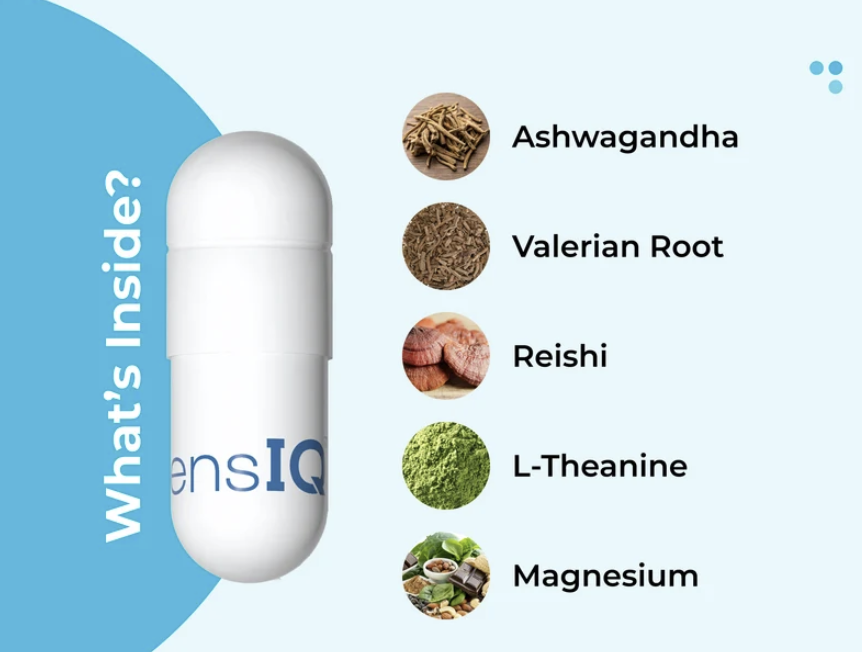
Ashwagandha (Withania somnifera) is the most studied adaptogen for stress-related sleep complaints. Standardized root extracts have been evaluated in randomized controlled trials for effects on perceived stress and serum cortisol, with sleep quality appearing as a secondary endpoint. The mechanism is upstream: it modulates the stress response rather than sedating the patient.
Magnesium and inhibitory tone
Magnesium functions as an NMDA receptor antagonist and supports GABAergic signaling, and insufficiency is common in precisely the population most likely to be complaining about sleep. Form matters clinically. Magnesium bisglycinate chelate is generally better tolerated than oxide or citrate at comparable elemental doses, which is often the difference between a patient staying on a protocol and abandoning it in week two.
L-theanine and alpha-wave activity
L-theanine, an amino acid found in green tea, increases alpha-wave activity associated with relaxed wakefulness without producing next-day sedation. It is a useful adjunct for the patient who describes a racing mind at lights out but who cannot tolerate anything sedating, because they may need to be functional if they are woken overnight.
Botanicals with a long clinical record
Valerian root and reishi (Ganoderma lucidum) both carry substantial traditional use and a growing, if mixed, evidence base. Both tend to be most useful as components of a stacked formula rather than as monotherapy.
Why "studied" usually means something weaker than it sounds
Almost every sleep formula on the market is justified by ingredient research: a trial on ashwagandha here, one on magnesium there, assembled into a finished product nobody has actually tested. It is a reasonable starting point, but it is not evidence that the specific combination in the bottle does anything.
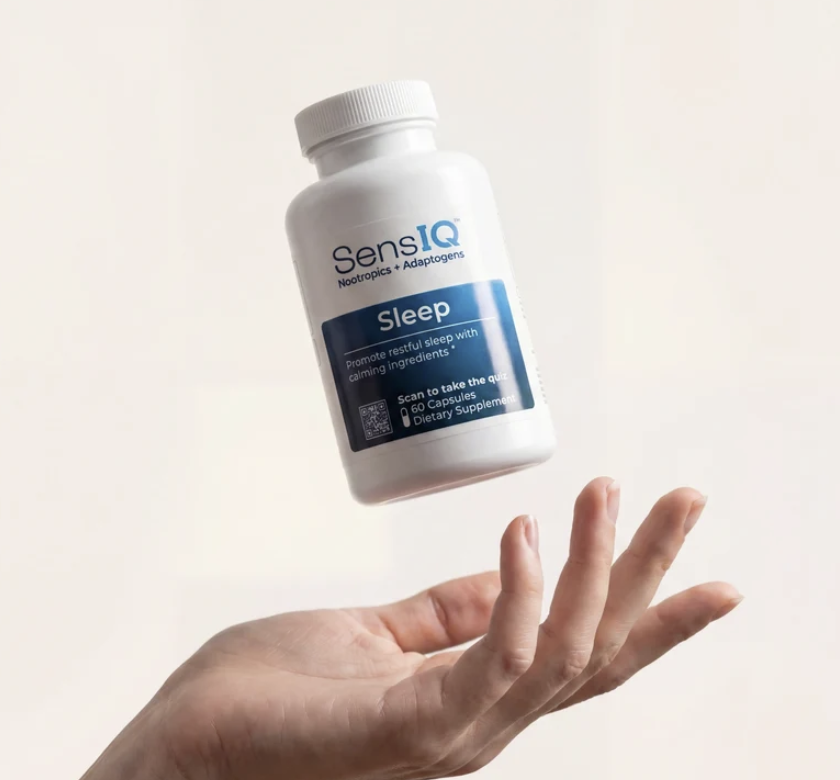
SensIQ Sleep was studied as a finished formula. The product that was tested is the product on the shelf, at the doses on the panel, with no melatonin and no proprietary blends. That is a narrower claim than most of the category makes, and a harder one to earn.
It was evaluated in an open-label study of 38 adults with diagnosed generalized insomnia over one week, published in the Journal of Sleep Disorders & Therapy (Barr and Kimless, 2025). Participants showed a statistically significant reduction in PROMIS Sleep Disturbance 8a scores, from 22.16 to 20.47 (p=0.027). Among the secondary measures, average satisfaction with sleep rose from 2.17 to 3.54 on a five-point scale, and average scores for restlessness and for difficulty falling asleep both fell.
The design limits deserve to be stated plainly: this was open-label, single-arm, small and short. It is a signal worth following, not a definitive trial. The published paper and full study details are available on the SensIQ clinical studies page.
Disclosure: SensIQ was co-founded by Dr. Luke Barr, a board-certified neurologist, who is also an author on the study cited above.
Putting it to work in practice
A few notes from practitioners already using this approach:
Set the expectation window. Adaptogenic and mineral-based support is cumulative. Ask patients to give it two to three weeks before judging it, not two nights.
Ask the sorting question at intake. "Do you have trouble falling asleep, or trouble staying asleep?" changes the recommendation more than any other single question you can ask.
Clear the confounders first. Evening alcohol, late caffeine and a warm bedroom will defeat any formula you recommend.
Check the caffeine column. If a patient is also taking a daytime nootropic, confirm whether it contains caffeine before you add anything to the evening.
The bottom line
For the patient who has already cycled through melatonin and come back frustrated, a non-hormonal, mechanism-stacked approach is usually the more honest next step, and it is worth reaching for one that has been tested as a finished formula. SensIQ Sleep is available in the GetHealthy catalog and can be added to your store in one click.
The full SensIQ line covers sleep, focus, memory, stress, clarity and healthy aging. You can review the formulas and the research at sensiqnootropics.com.
Explore how GetHealthy Stores and Script can support that connection in your practice.
These statements have not been evaluated by the Food and Drug Administration. This product is not intended to diagnose, treat, cure, or prevent any disease. Content is intended for licensed healthcare practitioners and is not a substitute for individual clinical judgment.